The train has to be yellow
I like this example of holding firm to a vision. Both politically and in terms of what it takes to deliver joined-up services that work better for the public.
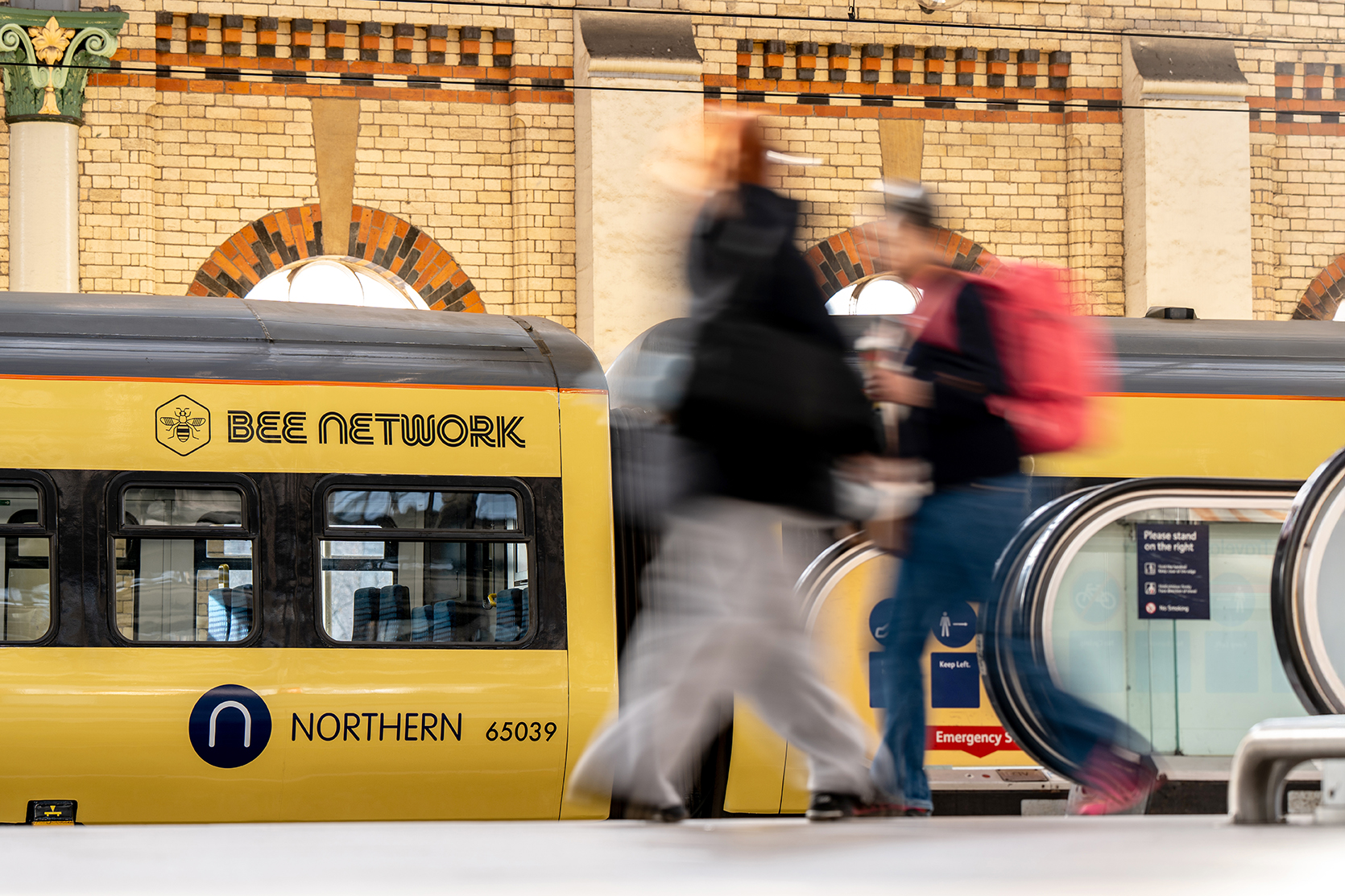
Andy Burnham, the Manchester Mayor, was pictured yesterday with this Bee Network train at Manchester’s Piccadilly station. This was to promote the first of eight commuter lines coming into his control next year.
The Bee Network has been building momentum, gradually expanding since 2023. As someone who spends regular time in Greater Manchester, I’ve increasingly noticed Trams and Buses with the same familiar yellow Manchester Bee inspired branding.
The vision held by Transport for Greater Manchester and the Mayor’s office (GMCA) is that, by 2028, Manchester will have a transport system where passengers can use one contactless card on buses, trams, and trains.
The previous system was a complex mix of different providers, pricing and ticketing models across different modes of transport. The Bee Network vision is for this to work in a much more joined-up way, simplifying journeys and reducing costs. Something much closer to how public transport works in Greater London.
What got my attention yesterday was the Manchester Evening News reporting how the rail launch began with Andy Burnham having to smooth over reported differences with government ministers. He wants Manchester’s trains to be painted yellow, in line with the single recognisable brand for the rest of the network. Whereas the national government’s priorities have been increasingly focused on the recently announced Great British Rail project. This is set to replace many operators in the coming years and has Union Jack branding. Responding to this at the launch event, Andy Burnham assured the press that there was indeed ‘alignment’ between his office, the government, and rail companies moving forward.
What’s obvious is that there will have been painstaking negotiations behind the scenes to reach some level of agreement here. But in the end, the train at the launch was yellow.
This is an important signifier of Greater Manchester’s transport vision, and it made me think about the importance of holding onto a bold vision in this way. Also, about keeping the focus on the outcomes that a change of this magnitude is trying to achieve.
In this case, the focus is on making transport services simpler and more accessible to the public. Any compromise on the level of consistency of having a single brand, or other elements like a unified pricing system, will compromise that. It will make the system and its end result less effective.
Greater London’s transport system works because it meets the needs of the public. It does this through consistent and clear ways of accessing different modes of transport and their variations, like how the rail network includes the Underground, Overground, and extended networks like the new Elizabeth Line.
These are all complex systems to apply single pricing and payment solutions to. But aspects like branding and strong design systems help ensure a level of simplicity and accessibility at the point of access. This also reminds me of design systems like the signage used across our road networks, and even our digital infrastructure that follows clear and consistent design patterns in places like GOV.UK – both of which are underpinned by the work of Margaret Calvert.
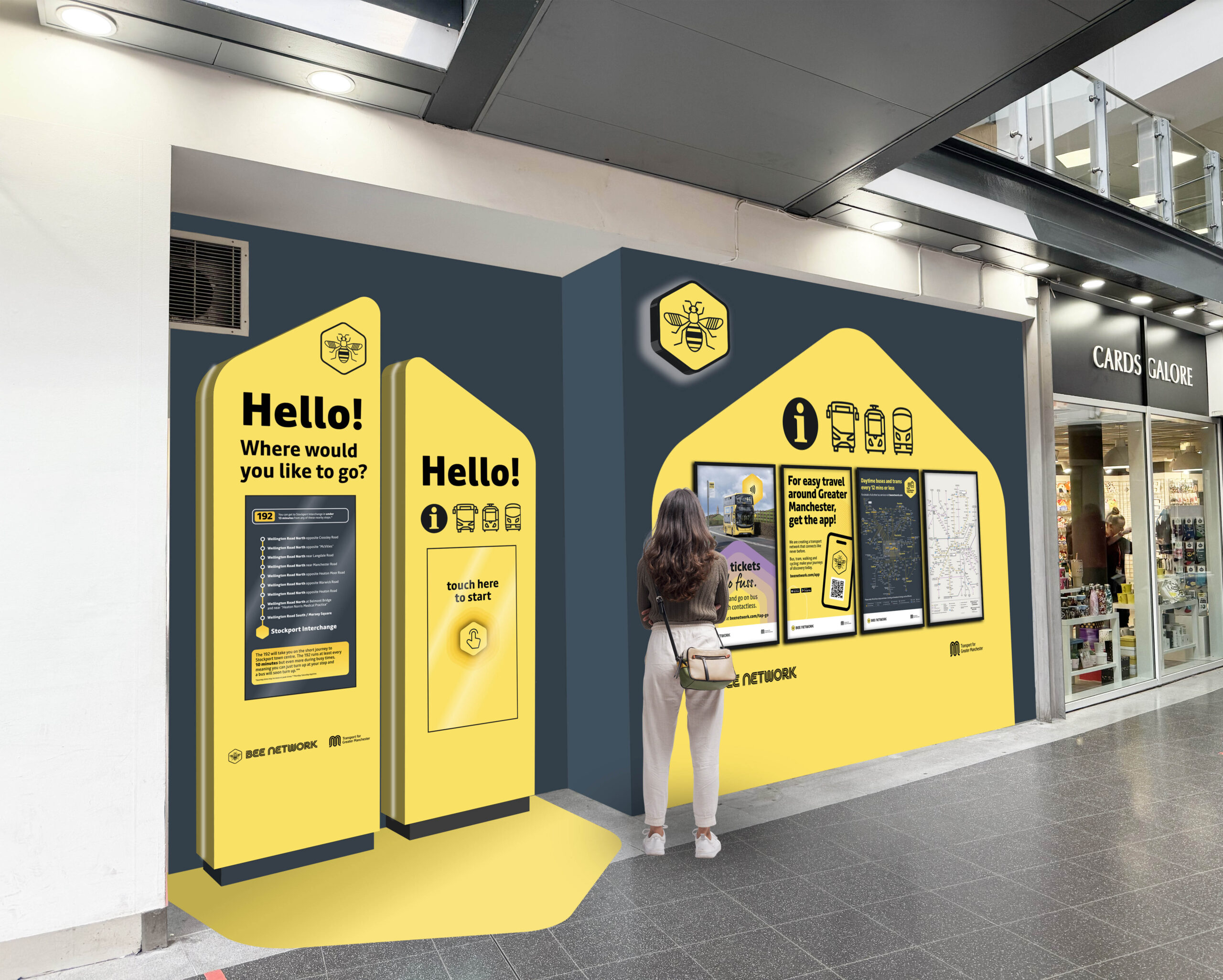
In the same ways, by applying design principles consistently, the Bee Network is gradually dealing with the underlying complexity of multiple providers and a vast and varied transportation infrastructure – all spread across a diverse city region.
“I’m going to make it really clear. I want to see all of our commuter trains in Bee Network yellow livery. I think it helps rail passengers if there’s a clear livery in the city-region so they know what’s a Greater Manchester service.”
Andy Burnham – Bee Network train launch, December 2025
There’s an important lesson here. As soon as you start to compromise on the yellow train, it’s the first step toward pushing system complexity back to the public. For people in Greater Manchester, it means public transport starts to become more complicated again. And once one decision has been compromised, it’s easier for the vision of the entire transformed system to slowly become eroded.
This is the importance of vision in service design and transformation. It can hold people, organisations, and entire systems accountable. And along with design principles, it can hold entire systems together.
It’s the combination of a bold vision and political willpower that makes this type of change possible – making sure it happens in coherent ways. It’s how whole systems can start to create and maintain effective solutions. Ultimately, making things work better for people in the places where they live.
This is my blog where I’ve been writing for 20 years. You can follow all of my posts by subscribing to this RSS feed. You can also find me on Bluesky and LinkedIn.